









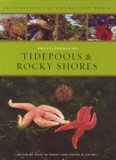
| Title: Encyclopedia of Tidepools and Rocky Shores | |
| Author(s): Mark W Denny and Steven D Gaines (eds) | |
| Date of Publication: 2007 | Publisher: University of California Press |
| Pages:xxvii + 705 | ISBN: 978 0 520 25118 2 |
| Price:£56 | Format:Hardback |
| Target Readership | Secondary | ||||
| Presentation/Style |  |
|
|
|
 |
| Content | |
|
|
|
|
| Literature | |
|
|
|
|
| Originality | |
|
|
|
|
| Overall | |
|
|
|
|
|
Content:
A-Z; Glossary. |
|
Review: At a time when the internet can be thought of as providing all the material one might need there is still a commitment to producing encyclopedias. Surely these go out of date too fast, surely they can't provide all the resources this 'net generation' might need? Actually the answer can be yes in both cases but it does depend on what you are doing and how you go about it.One of the key arguments for the internet is that it allows readers to find out anything instantly. The problem is, you need to know what you are looking for in the first place. The web is not, as has been argued, serendipitous. Search engines are precise algorithms delivering what they find. It doesn't tell you how good the information is nor if it is complete nor what bits join on to it. Into this argument we have this encyclopedia focussing on that most extreme of environments, the coast, or more precisely, tidepools and rocky shores. The text is part of a larger series called Encyclopedias of the Natural World (although this would appear to the the first one published). The aim is to cover all of the key topics in an A-Z fashion - Abalones to Zonation. Readers can browse either in the standard dictionary way or by looking at topics arranged by subject area. This is an interesting and useful device. If you want to see what is available then it is possible to browse through the content. However, if there's a specific topic area e.g. ecology and behaviour (one of 16 topics in this book) then it's possible to see all the entries in this category and then go to those. Each entry is written in an accessible style with the general reader as intended audience. An entry is usually 3-4 pages long with 186 separate entries in total. Each article has a reading list and a small feature mentioning related articles - particularly useful to the beginner. Coverage is global rather than local with contributors largely from North America but also from all other areas except Middle East. This gives the text an international feel. Rather than discuss each of the 186 articles (which would become rapidly tedious given the uniformity of production!) the issue whether one might find use for a book like this. As one teaching coastal ecology and management topics the answer must be yes. The book covers are very wide range of topics - it would be unusual if the beginner could not find an answer here. The writing style and production is such that it encourages people to read on. The fact that the book is structured means that students will be focussed on the topic and not be distracted by extraneous material which is so often the case with the internet. One could easily imagine groups working through this for their ecology projects. Overall, an excellent publication - a 'must buy' for any coastal field centre and definitely recommended as a library text where coastal issues are taught. |