










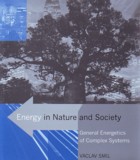
| Title: Energy in Nature and Society | |
| Author(s): Vaclav Smil | |
| Date of Publication: 2008 | Publisher: MIT |
| Pages: xi + 480 | ISBN: 9 780262 693561 |
| Price: | Format:Paperback |
| Target Readership | Educator | ||||
| Presentation/Style |  |
|
|
|
|
| Content | |
|
|
|
 |
| Literature | |
|
|
|
|
| Originality | |
|
|
|
|
| Overall | |
|
|
|
|
|
Content:
1 – The universal link - energetics, energy and
power; 2 - Planetary energetics - atmosphere, hydrosphere and
lithosphere; 3 - Photosynthesis - bioenergetics of primary production;
4 - Heterotrophic conversions - consumer bioenergetics; 5 - Human
energetics - people as simple heterotrophs; 6 - Traditional food
production - humans as solar farmers; 7 - Preindustrial complexification
- prime movers and fuels in traditional societies; 8 - Fossil
fuels - heat, light and prime movers; 9 - Fossil-fueled civilisation
- pattern and trends; 10 - Energy costs - valuations and changes;
11 - Environmental consequences - metabolism of fossil-fueled
civilisation; 12 - Energetic correlates - complexities of high-energy
civilisation; 13 - Grand patterns - energetic and other essentials. |
|
Review: It should be possible to divide current ecological thought into three main paradigms. We start with the work of Odum and the idea of ecological energetics in the 1970s. This was replaced by work like Krebs' dealing with distributions and abundances. Currently, Begon et al are dealing with scalar relationships in populations and communities. These paradigms are powerful but even when replaced there is still much to be said for the earlier notions. No-where is this more true than in energetics. Although we get good research profiles on this in terms of mainstream there is nothing like the popular understanding of 30 years ago. This is a pity because energy is a key topic and one of its main writers, Smil, has just given us his latest ideas on the topic. The aim of the book is to provide a comprehensive overview of energy and energetics. The sub-title 'general energetics of complex systems' should give some clue as to the content. Here we are concerned about the way in which energy is transferred through and around the environment. To start, we are given a brief review of some of the key figures in the energy debate and their ideas. It acts to set the topic in a broader historical perspective. Chapter two becomes an energy primer with an overview of solar and other energy sources from volcanoes to plate tectonics. We get an idea of the dimensions of energy flow. From this point we focus on specific areas of energy use starting with photosynthesis. This moves on to show how this energy is 'consumed' by herbivores (chapter 4) and people (chapter five). This latter chapter considers human metabolism and food gathering as ways of using and gaining energy. Chapter six takes the energy production side in greater detail by examining the energy in agriculture. The next rung up the energy ladder brings us to energy uses of energy systems from the pyramids to late 19thC London. This period is followed by the initial uses of oil and gas and the energy implications of this. Chapter 9 is linked to this in that it considers the trends generated by the mass use of cheap stored energy in terms of fuel, electricity and energy efficiencies. The final item here gets further treatment in chapter 10 which asks the questions first posed many years ago - what are the energy costs of something. Too often we have taken 'cheap' energy for granted and here we have a chance to see how energy costs are attached to many objects. There are more efficient ways and this chapter points us in the right direction. Even the most fervent technocentrist would admit to the issues being created by our increasing demand for energy but it's left to chapter 11 to tackle the key ones. Here we look at power densities, energy flows in society, economics and the rate of return on energy investments. Again, this final point is carried forward to chapter 12 which examines in some detail the demand for energy and the cost (energy and otherwise) of producing it. Increasingly we are finding it takes more energy to find a supply than it might produce. There is also a sobering analysis of war but, this time, from the unusual but effective method of energy usage and rate of return. A final chapter summarises the main changes and suggests ways to the future. This is a book of amazing scope and depth. It covers a very wide range of energy situations whilst at the same time looking in considerable detail at the topic. Ideas and (especially) calculations abound, not to intimidate the reader but to highlight the connections and inter-dependencies of energetics. We are left in no doubt that our current way of (Western) living is incompatible with global equity and even with simple supply of resources on a more equitable basis than of late. By showing the relationships between power and usage, Smil has produced a text of considerable value to those wanting to put the current energy debate (and other energy issues) on a more rigorous footing. In summary one must say that this is one of the most important books published this year. Its scope is breathtaking and its detail is stunning. Having followed, reviewed and used many of Smil's books over the last 25 years we have here a writer and academic on top form producing, in this text, one of the clearest summaries yet on global energetics. It should be essential reading for anyone looking at any aspect of applied energetics and is certainly at the top of my must-buy list this year. |