And you say it’s what?
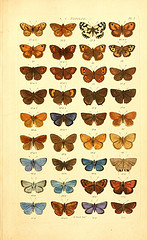
Over the years, one of the most crucial but difficult skills has been species identification. OK, difficult for me but I’m guessing , possibly, others! It might be because I came to ecology via earth sciences (rocks and fossils no issue, living material, more difficult!). Looking through the BES bulletins, I found a common thread. How do we accurately identify species in the field and, probably as an adjunct, but I’d argue needs a higher profile, how do we support taxonomy? We all know that identification is key but how can we promote it effectively especially in schools.
I’m going to argue that there are exciting times ahead for ecological education in this regard. I suppose I ought to chart my own journey here. I grew up with a mix of the Collins New Naturalist series (I note that the series is still going strong with Michael Proctor’s Vegetation of Britain and Ireland published recently) and the Collins Field Guides, the former giving me some context, the latter helping me out when I ran out of ideas in the field. The diagrams were exquisite and the whole text drew in students. Often they carried on to find out more.
Skip to today and we don’t find the same enthusiasm for field guides but we do have a greater range of tools at our disposal. Identification can be painless and it can lead students into deeper work. Let’s face it, as educators, our aim is to enthuse our students and get them to appreciate the ecology of the area. Research shows if they can identify with it, they are more likely to support conservation. So, what can we do? Here’s a sneak view of some of the material around. Currently, there is no one app I can find (let me know if you can find one) that looks at every species in a nation but the future looks great. So, what do we want to do in species identification? Probably, three things: find out what it is, note it down and find out more.
Finding out what it is. A recent Guardian article, mentioned a programme called Leafsnap, a US programme aimed at making tree identification as easy as taking an image. I am just amazed at what this can do and where it could go. Identification shouldn’t be a drawback and this would make it so easy. Then there are the more conventional guides only portable. Treeld looks an interesting app and birds are well covered by BirdGuides where you can even upload data to the BTO. There again, there’s the simple Tree Guide
Noting it down. There are heaps of recording devices on your tablet/mobile device. No longer do we wait for field sketches but take images from single shots to panoramas to movies. Record sounds on your smartphone and upload them to a blog afterwards. The opportunities to record and display are endless but one note in the June Bulletin made me stop and look. Called iRecord, it’s a way of uploading data to a central site. It’s linked to an idea of citizen science; people sending in records. Of course, this is not new. There was the classic lichen study in Ireland in the early 1970s that got students involved in field recording and let’s not forget the Land Utilisation Survey’s ground-breaking work.
Finding out more. Identification is only part of the work. The task is to find out more. Is it in the normal range? What’s it’s ecology/ethology etc. Projects are endless from this point on. A good start would be the National Biodiversity Network where you get species records, maps etc.
Let’s end with a challenge! Get your students to plan out the fieldwork recording. Offer rewards for the most innovative responses in the areas of identification, recording and publication. Allow any form of medium. Providing they have some training in the tablet and smartphone technologies, stand back and prepare to be amazed.
Got a good story? Share it!
